
AI-NATIVE HARDWARE ENGINEERING
Intelligence in
the engineering process.
We aim to develop proprietary AI-powered tools for the decisions that shape an actuator, connecting disciplines and bringing more alternatives into the design process.
Explore the engineering loopOur objective is to accelerate development cycles, reduce engineering costs and optimize torque density, efficiency, weight and reliability.
AI-NATIVE BY DESIGNA CONNECTED DEVELOPMENT LOOP
Design. Simulate.
Optimize. Validate.
AI-powered tools are intended to connect these decisions throughout the R&D process.
Start with the right constraints.
Translate the application brief into design variables, interfaces and objectives. Explore motor, transmission and packaging options as one system.
Connect the physical disciplines.
Evaluate electromagnetic, mechanical and thermal behavior together, with sensing and control requirements considered alongside the hardware.
Understand the trade-offs.
Use AI-powered design exploration to help compare candidates across torque density, efficiency, weight, reliability and manufacturability.
Close the loop with evidence.
Build prototypes, measure their behavior and use physical results to refine models and guide the next engineering iteration.
The AI engineering toolchain is an R&D direction. Product decisions are intended to be validated through prototypes and physical testing.
THE CORE MOTION PLATFORM
One system.
Every detail, connected.
A compact rotary actuator brings six engineering disciplines together. We are developing them as one integrated system.
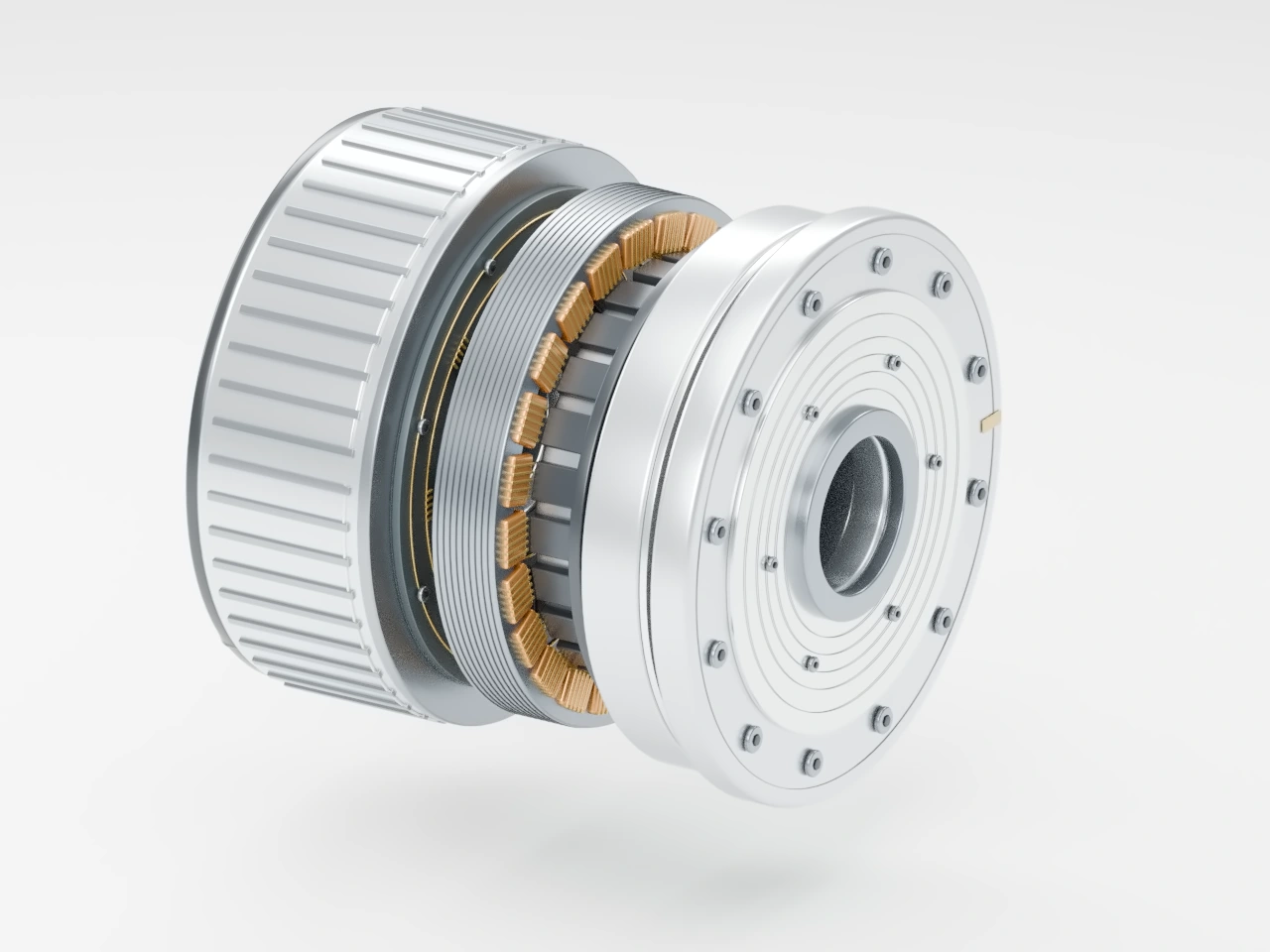
ILLUSTRATIVE ARCHITECTURE
Motion starts at the core.
Frameless motor design brings electromagnetic performance, compact packaging and continuous torque into the same engineering conversation.
Translate power into useful motion.
Transmission architecture balances reduction, efficiency, backdrivability and the loads a robotic joint must handle. The right choice starts with the application.
Understand what the joint is doing.
Position, torque and condition monitoring are development priorities for a joint that can support precise control and informed fault responses.
Connect every movement.
Power electronics, embedded control, diagnostics and communications must work together inside the available space and thermal envelope.
Make heat part of the design.
Thermal paths and heat management shape what an actuator can sustain. We bring these constraints into the architecture from the beginning.
Bring the complete system together.
Compact packaging, assembly, calibration, traceability and service access belong in a common development process, from the first concept onward.
THE ENGINEERING OBJECTIVES
Evaluate the trade-offs.
Improve the whole system.
Our development process considers connected performance objectives, with physical validation guiding each iteration.
BUILD WHAT COMES NEXT
Let’s move
your next idea.
Start with the motion, load and environment your system needs to handle.
Discuss your application