Compact integration
Consider the motor, reduction mechanism, sensing, electronics and mechanical package together from the first architecture.
 Let’s talk
PRODUCT DEVELOPMENT
We are developing a connected path from precision components to integrated smart actuators and application-specific motion modules.
Inside the actuatorProducts and platforms are under development. Specifications and availability are defined through engineering and application validation.
INSIDE INTELLIGENT MOTION
Scroll to separate.
Scroll back to reassemble.
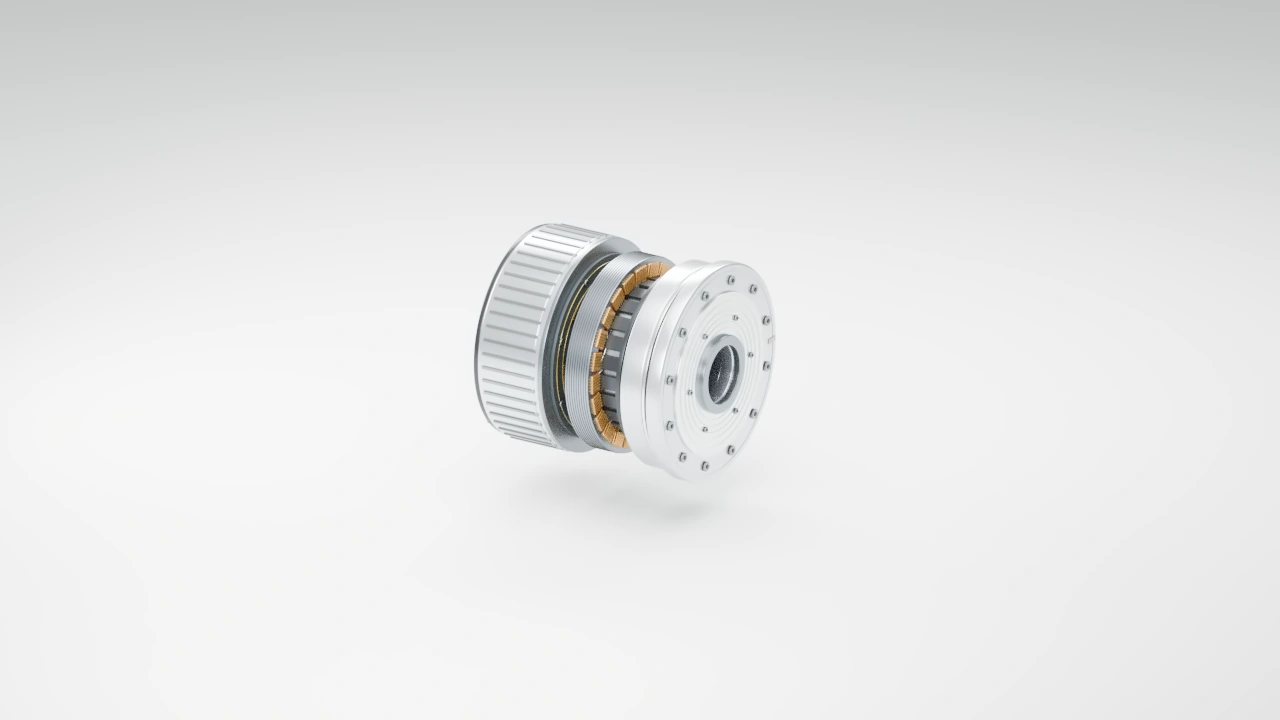
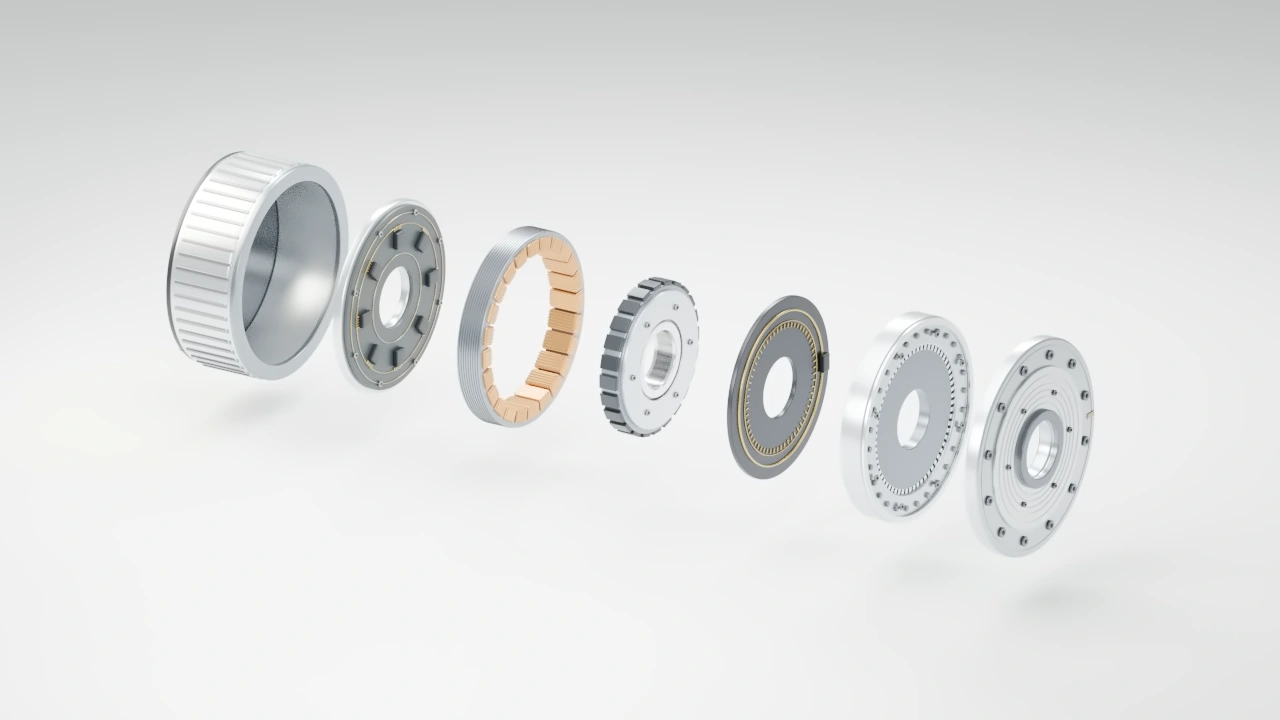
Illustrative actuator architecture. Final product design is under development.
01THE CORE MOTION PLATFORM
Compact rotary actuation, developed as one integrated system.
We are developing smart actuators that bring the motor, transmission, sensing and embedded control into a coordinated architecture. Each design decision is considered against the complete joint: the motion it must deliver, the heat it must manage and the space it must occupy.
Our approach treats torque density, efficiency, weight and reliability as connected engineering objectives. AI-powered design exploration is intended to help our team evaluate trade-offs earlier, while prototypes and physical tests remain essential to validation.
Discuss your actuator requirementsConsider the motor, reduction mechanism, sensing, electronics and mechanical package together from the first architecture.
Bring electromagnetic design and thermal pathways into the same development loop, with continuous duty considered alongside peak demands.
Explore position, torque and condition sensing that can support precise control and useful diagnostics.
Design with assembly, calibration, inspection and service access in view.
Prototype testing is intended to assess motion, thermal behavior, efficiency and integration against the requirements of the target application.
02THE MANUFACTURING FOUNDATION
A manufacturing foundation for advanced motion systems.
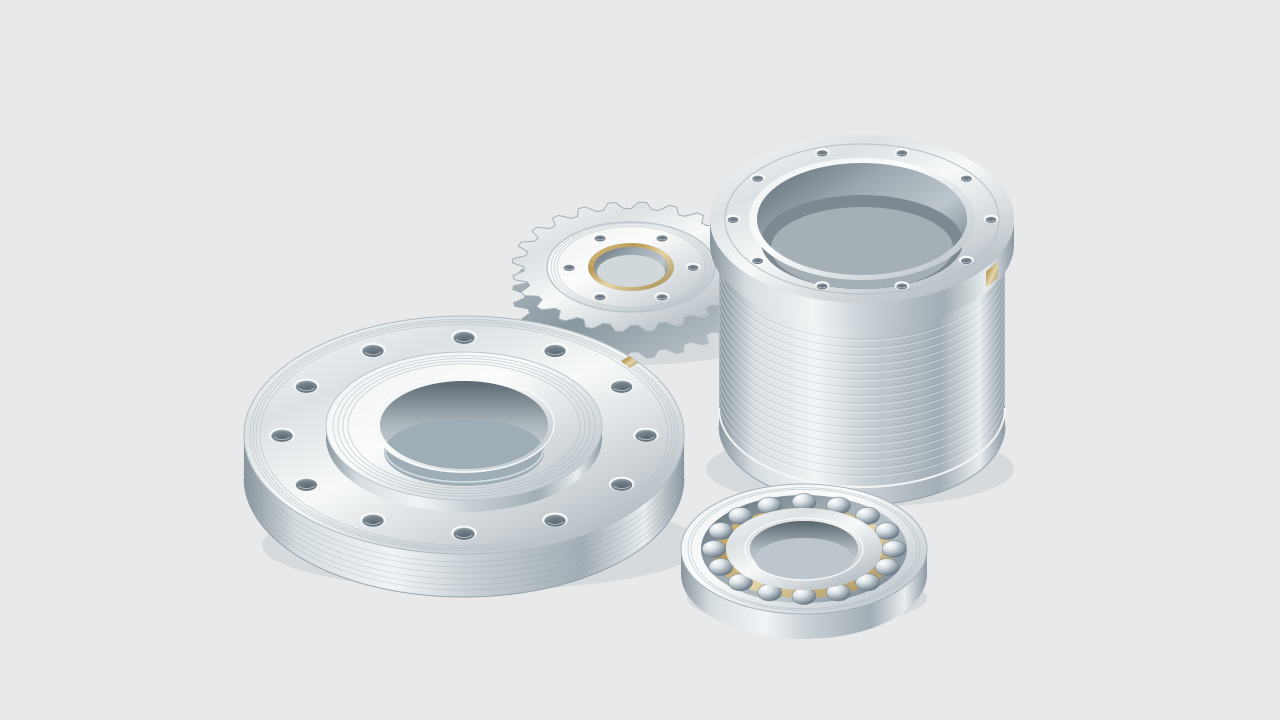
KQ’s industrial strategy starts with precision components and subassemblies, then advances toward complete actuators. We connect mechanical design intent with the processes needed to produce, inspect and assemble motion hardware consistently.
This development direction draws on the team’s manufacturing experience and Vietnam’s industrial capabilities. The focus is the relationship between part geometry, material and process selection, critical interfaces, assembly sequence and measurable quality requirements.
Discuss a component programReview tolerances, interfaces and process choices together so that the design can progress toward repeatable production.
Consider how mating components, subassemblies and inspection steps contribute to the complete actuator.
Develop inspection, calibration and traceability requirements around the characteristics that matter to the application.
Carry prototype learning into production planning and supplier development.
The development scope is defined from the part and assembly requirements, including first-article review, inspection planning and the evidence needed before scaling.
03BUILT AROUND THE APPLICATION
Co-development shaped by the work your robot needs to do.
A motion system is defined by its application. KQ’s development approach connects actuator architecture with the surrounding mechanism, controls and operating environment to explore a module that fits the wider system.
For industrial and defense-relevant robotics, that means considering the complete integration brief: repeated loads, changing conditions, service access and the response to faults. For humanoids, compact packaging, dynamic motion and force-aware control shape the engineering conversation.
Explore a co-development projectTranslate motion, load and duty-cycle needs into a coherent development brief.
Consider mechanical interfaces, sensing, controls and thermal pathways across the module boundary.
Bring condition monitoring, fault response and practical maintenance into the design priorities.
Progress from architecture and prototypes toward application-specific testing and qualification.
Qualification requirements are defined for each application. The development process must establish the operating limits and appropriate response to faults before use.
FROM REQUIREMENT TO REALIZATION
Understand the motion, loads, environment and interfaces.
Explore architectures and build application-led prototypes.
Test against the agreed operating and integration requirements.
Develop the assembly, calibration and quality processes for production.
BUILD WHAT COMES NEXT
Start with the motion, load and environment your system needs to handle.
Discuss your application